A bare sandbar after the flood
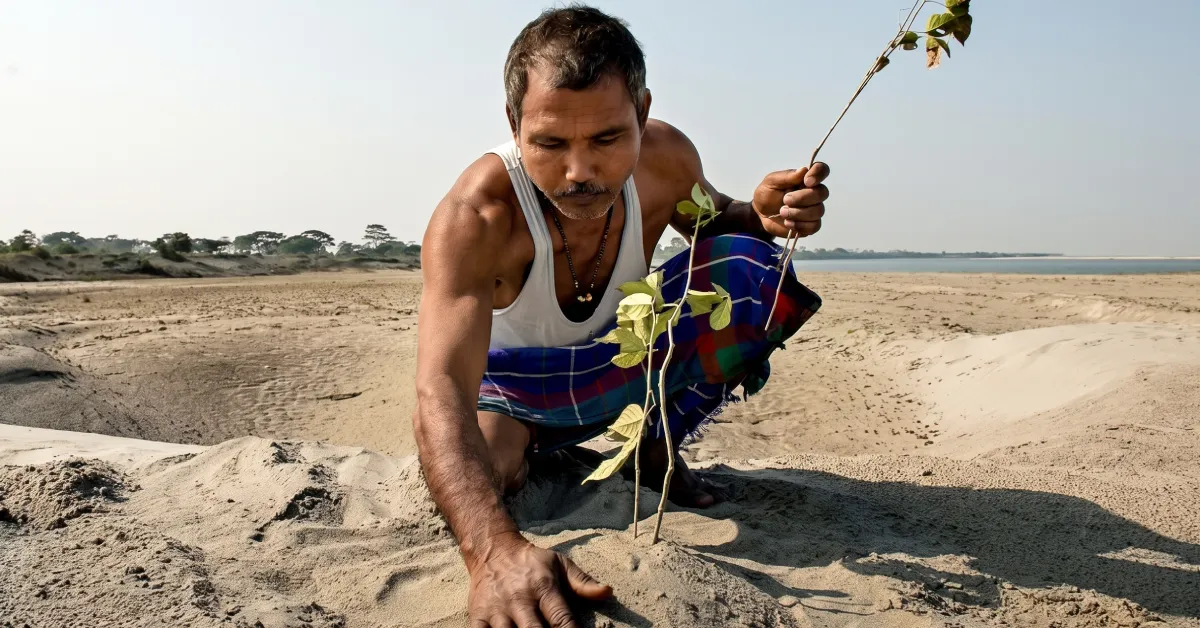
In 1979, floodwaters receded from a Brahmaputra sandbar in Assam and left behind a harsh, treeless stretch of land. Jadav “Molai” Payeng later recalled seeing snakes dead in the open heat, with no shade to protect them.
He asked what could be done. According to Assam government accounts, people from a nearby Deori village gave him bamboo to plant. Payeng began putting it into the sand, hoping to bring shade and life back to the exposed land.
That was the start of work that would continue for decades.
The site lies in the Brahmaputra floodplain near Majuli and Kokilamukh in Assam. It is a chapori—a riverine sandbar or islet shaped by the river. Floods, shifting channels, fresh sediment, and erosion constantly change this landscape.
Over time, the area became known as Molai Forest, or Molai Kathoni, after Payeng’s nickname. His story is often told as a simple transformation from bare sand to forest. In reality, its deeper lesson is about returning year after year to plant, care for young trees, and protect a place that the river can still reshape.
Who is Jadav Payeng?
Jadav Payeng is an Assam-based farmer, environmentalist, and long-term forest caretaker from the Mising community. He is widely known as the Forest Man of India, a public title linked to his decades of work with trees in the Brahmaputra floodplain.
The story of Jadav Payeng’s forest restoration work began with a practical response to visible loss. He started with what was available: bamboo and a damaged patch of river land.
But planting was only the first step. Payeng kept returning to the site through changing seasons, floods, and difficult growing conditions. That long-term care is what sets his work apart.
Forest restoration is not finished when seedlings go into the ground. Young plants need protection. Some fail. Floods can undo years of effort. Healthy vegetation also depends on soil, water, weather, and the natural recovery of a landscape.
How Molai Forest took shape over decades
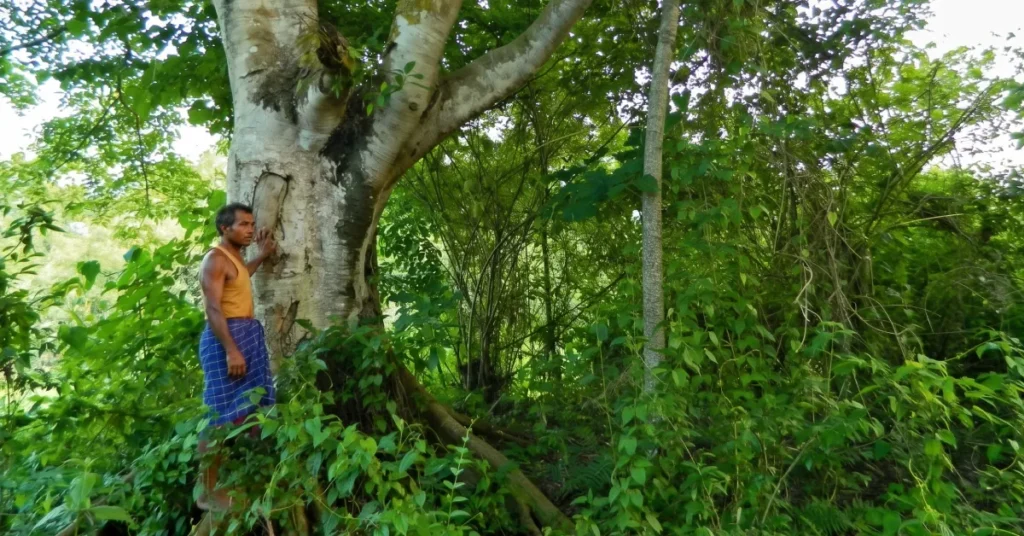
Payeng continued planting and caring for vegetation on the floodplain for many years. Bamboo formed part of the early work, followed by a range of tree species. Slowly, the exposed sandbar became a more wooded riverine habitat.
Molai Forest is often described as one man’s forest, but the site has a wider history. A 2024 Majuli district report identifies Molai Kathoni at Kartik Chapori and says the Golaghat Social Forestry Division created a 200-hectare plantation, probably in 1981–82.
That does not lessen Payeng’s contribution. It gives a clearer picture of it.
Payeng’s defining role was his decades of planting, tending, and protecting the landscape. The forest’s development also involved earlier social-forestry work, surviving vegetation, natural regeneration, water, soil, and the changing conditions of the floodplain.
Molai Forest is widely reported to have covered about 1,360 acres, or 550 hectares. This should be treated as a historical estimate, not as a recent measurement of the forest today. The Brahmaputra remains active in this area, and the 2024 district report says erosion has affected parts of the plantation.
Even with that uncertainty, the work remains remarkable. A place once known for exposed sand and little shade became one of Assam’s best-known examples of long-term forest restoration.
What a riverine forest can contribute
The Brahmaputra floodplain is always in motion. It includes wetlands, channels, flooded land, sandbars, and new deposits of river sediment. One season can leave land exposed; another can change its shape completely.
That makes riverine forest restoration difficult. Young trees can be damaged by floodwater. Soil can shift. A river channel may move closer to a planted area.
Still, vegetation can help a landscape recover locally. Bamboo, grasses, shrubs, and trees create shade and shelter. They add organic matter to the ground as leaves and branches break down. They can also support insects, birds, and other forms of life.
The forest shows why restoration needs patience. A riverine forest is not just a dramatic before-and-after picture. It is a living cover that develops over many years in a place that remains uncertain.
Popular accounts often attach dramatic wildlife claims to the site. Many of those claims do not have reliable current surveys behind them. Molai Forest does not need exaggerated numbers to matter. Long-term tree cover and habitat in an erosion-prone floodplain are valuable on their own.
Why the story needs care as well as celebration
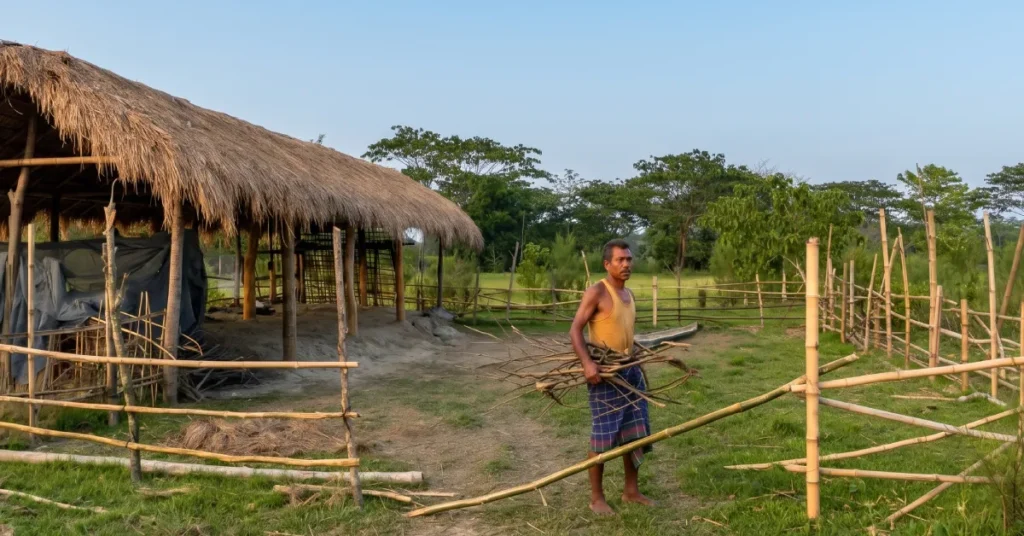
Payeng’s work deserves recognition, but it should not be treated as a complete answer to Majuli’s environmental challenges.
Majuli and the surrounding Brahmaputra landscape face regular flooding and persistent erosion. The river can create sandbars, but it can also cut into them. The 2024 district report says that parts of the Kartik Chapori plantation have already been eroded.
That is why Molai Forest should not be described as a solution to Majuli’s wider flood or erosion problems. Trees and vegetation can support local habitat and help hold soil where they grow, but they cannot control a powerful, shifting river system on their own.
The real lesson is more grounded. One person’s steady care can help restore life to a damaged place, even when the future of that place is never guaranteed.
It also shows why one-day planting events are not enough. Restoration can involve watering, protection, replacement planting, local knowledge, and adapting after storms or floods.
Recognition and a legacy of long-term care
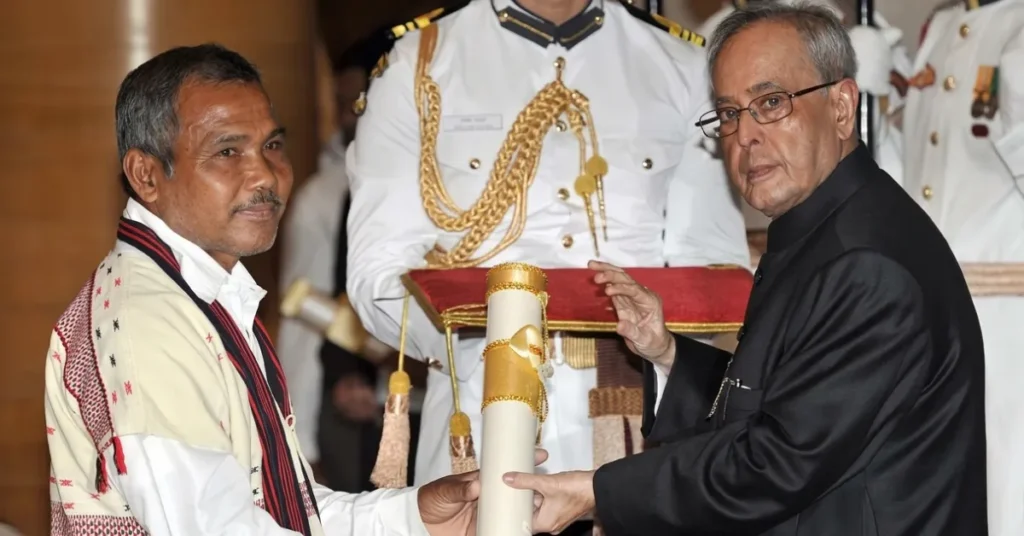
Payeng received the Padma Shri in 2015 for forest conservation, one of India’s highest civilian honours. He is also widely known as the Forest Man of India.
But the heart of the story remains the long-term work behind it. Payeng kept caring for the land long after the first bamboo was planted and long before his work became widely known.
His example does not suggest that every environmental problem can be solved by one person. Large-scale conservation often needs public policy, funding, science, local leadership, and community participation.
But it does show what persistence can do. A sapling can be planted quickly. A living forest needs years of care.
Support restoration that lasts
Jadav Payeng’s work is a powerful example of what sustained local stewardship can look like. It reminds us that planting trees matters most when it is paired with long-term care, respect for local ecosystems, and support from people who know the land.
Support community-led environmental conservation that values native vegetation, ongoing maintenance, and local knowledge. If you’d like to take practical action in your own area, you can also volunteer for environmental conservation.
Molai Forest is not a story about one person having to do everything alone. It is a reminder that caring for a place, again and again, can leave a lasting mark.
FAQs about Jadav Payeng and Molai Forest
Did Jadav Payeng plant Molai Forest alone?
Payeng spent decades planting and caring for trees and other vegetation at Molai Forest. But he did not plant every tree across the entire area alone. A 2024 Majuli district report also records a 200-hectare government social-forestry plantation, probably established in 1981–82.
How large is Molai Forest?
Molai Forest is widely reported to have covered about 1,360 acres, or 550 hectares. This is a historical estimate, not a confirmed current measurement. The Brahmaputra has eroded parts of the plantation, so the figure should not be treated as an exact present-day total.
Where is Molai Forest located?
Molai Forest is in the Brahmaputra floodplain near Majuli and Kokilamukh in Assam. It is associated with a chapori, or riverine sandbar, rather than being accurately described as entirely on Majuli Island.
Why is Jadav Payeng called the Forest Man of India?
The title reflects public recognition of Payeng’s decades of planting and forest care in Assam. It is a widely used honorific, not a formal award title. He received the Padma Shri in 2015 for forest conservation.