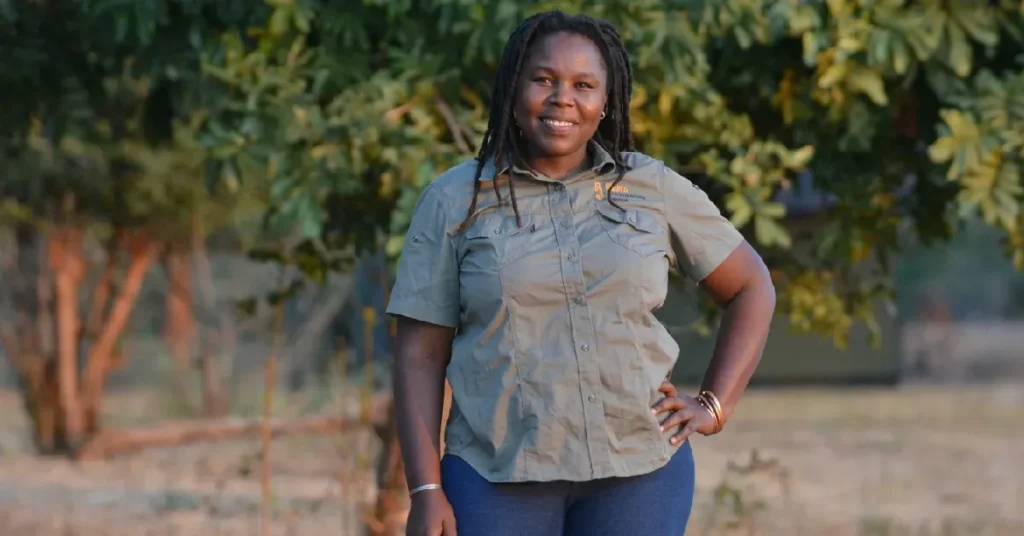
A turning point: why lion conservation had to include people
In 2014, Moreangels Mbizah was tracking lions for her doctoral research in Hwange National Park. A GPS signal led her team toward a nearby village.
In a 2026 interview with The GuardianMbizah recalled what happened next: a lion had killed a seven-year-old boy. Wildlife authorities later killed the lion while recovering the child’s body.
For Mbizah, it was a painful turning point. Studying lions was not enough. Conservation also had to take seriously the safety, fear, and livelihoods of people living near them.
That idea now guides her work on human-lion coexistence in Zimbabwe. Through Wildlife Conservation Action, she works with local communities on ways to prevent dangerous encounters before livestock are lost or people are harmed.
The incident happened in Hwange. Today, WCA’s work includes Mbire District and the wider Lower and Middle Zambezi Valley in northern Zimbabwe.
Who is Dr Moreangels Mbizah?
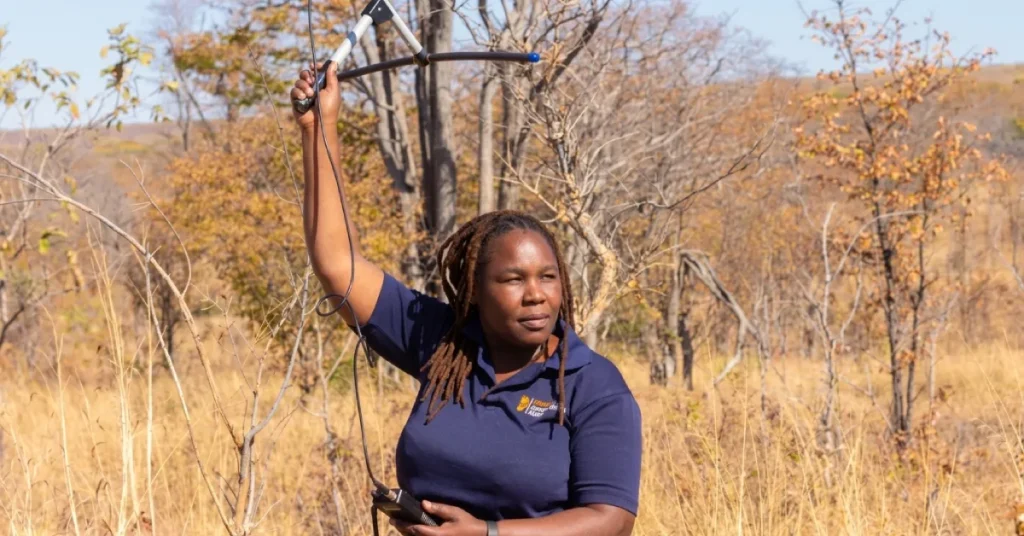
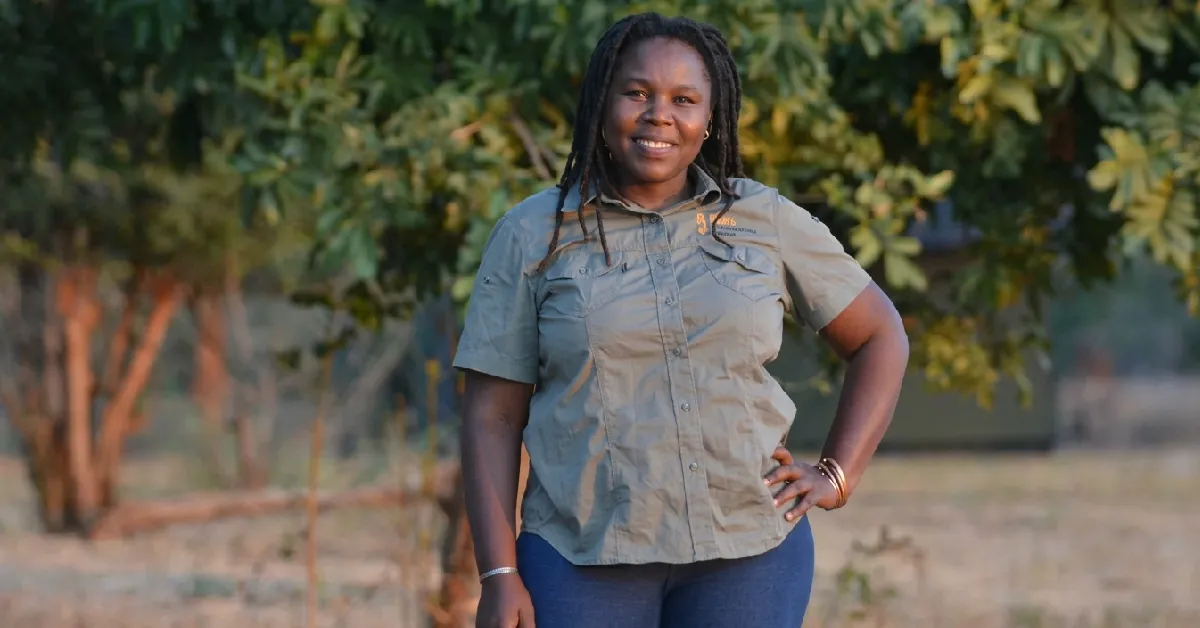
Dr Moreangels M. Mbizah is a Zimbabwean conservation biologist, lion researcher, and the founder and Executive Director of Wildlife Conservation Action (WCA).
Founded in 2019, WCA brings together wildlife research, local knowledge, and practical support for communities living alongside wild animals.
Mbizah completed her doctoral research at the University of Oxford, studying African-lion ecology in Hwange National Park. Her work now focuses on a difficult question: how can people and wildlife share the same landscape more safely?
WCA works in parts of the Lower and Middle Zambezi Valley, where savanna, mopane woodland, rivers, farms, and communal lands meet protected wildlife areas. In and around Mbire District, lions and other animals can move into places where families keep cattle, goats, and crops.
For a family that depends on livestock, a lion entering a kraal at night is not an abstract wildlife issue. It can mean lost food, lost income, and fear for the people and animals left behind.
Why livestock losses put families and lions at risk
For many rural households, livestock can provide food, income, savings, and support during hard times. When a lion kills a cow, goat, or donkey, the loss can affect a family for months.
It can also create anger and fear. Families trying to protect their remaining animals may retaliate against predators. Lion conservation in Zimbabwe cannot be separated from the need to protect local livelihoods.
Mbire has seen the consequences of this conflict before. A peer-reviewed study recorded that lions killed four people and more than 100 livestock in the district in early 2010. Those events are historical context, not a measure of today’s conflict levels.
They do show why communities cannot simply be expected to live with dangerous wildlife encounters without support, information, or a voice in conservation decisions. Human-wildlife conflict in Zimbabwe is also about trust and who carries the costs of conservation.
How Wildlife Conservation Action helps prevent conflict
WCA combines local knowledge, safer livestock practices, wildlife monitoring, and quick communication. At the heart of the work are locally recruited Community Guardians, known as Batabilili.
WCA says the guardians report conflict incidents, collect local information, monitor wildlife movements, share safety messages, and warn households when wildlife may be nearby. They also help families assess livestock enclosures and consider ways to make them safer.
Community Guardians cannot prevent every dangerous encounter. They help connect households, conservation staff, and wildlife authorities when a problem is developing.
Safer places for livestock at night
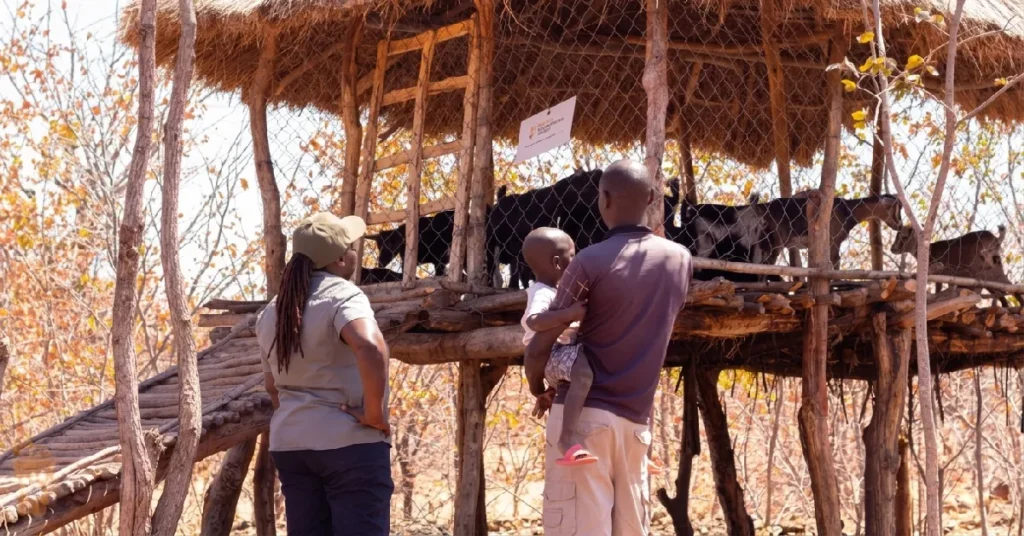
A kraal is a livestock enclosure, usually used at night. WCA supports families to strengthen traditional kraals and use mobile predator-proof bomas. A mobile boma is a movable enclosure designed to be harder for predators to enter.
WCA also uses lion lights around some livestock enclosures. These solar-powered flashing lights are intended to discourage lions from coming close at night without harming them.
No enclosure or light works perfectly in every situation. Results can depend on where it is used, how well it is maintained, local lion behaviour, and whether livestock are brought in before dark. Stronger enclosures can offer families more protection when animals are most vulnerable.
Using tracking data for early warnings
GPS collars can show where collared animals are moving. Where an alert system is operating, that information can help identify when a lion is approaching farms or settlements. Households may then have time to bring livestock in, avoid higher-risk areas, or stay alert overnight.
GPS tracking has limits. Not every lion wears a collar, and no alert system covers every household or part of the landscape. Local knowledge remains essential. Guardians can share what people are seeing on the ground, where livestock are grazing, and which areas need attention.
This is community-led conservation in practice. WCA can provide training, tools, and support, while households and local guardians adapt those measures to the places where they live.
What the reported results show—and what they don’t
In April 2026, the Whitley Fund for Nature reported that conflict incidents had fallen by 49% across three districts since 2021 in areas linked to WCA’s work.
The fund also reported reductions of up to 98% in some wards. WCA identifies its initial Nyaminyami wards 3 and 4 as the location for its reported 98% decline. That figure does not apply to all of Mbire District, all of Zimbabwe, or every kind of human-wildlife conflict.
The Whitley Fund for Nature also reported that, by April 2026, WCA’s work across the Zambezi Valley had protected almost 18,000 livestock, valued at US$2.3 million.
These are programme-reported figures, not proof that one intervention caused the same result everywhere. They show the reported reach of the work, but conflict has not ended. Local conditions, livelihoods, and wildlife movements can change quickly.
What the 2026 Whitley Award could support next
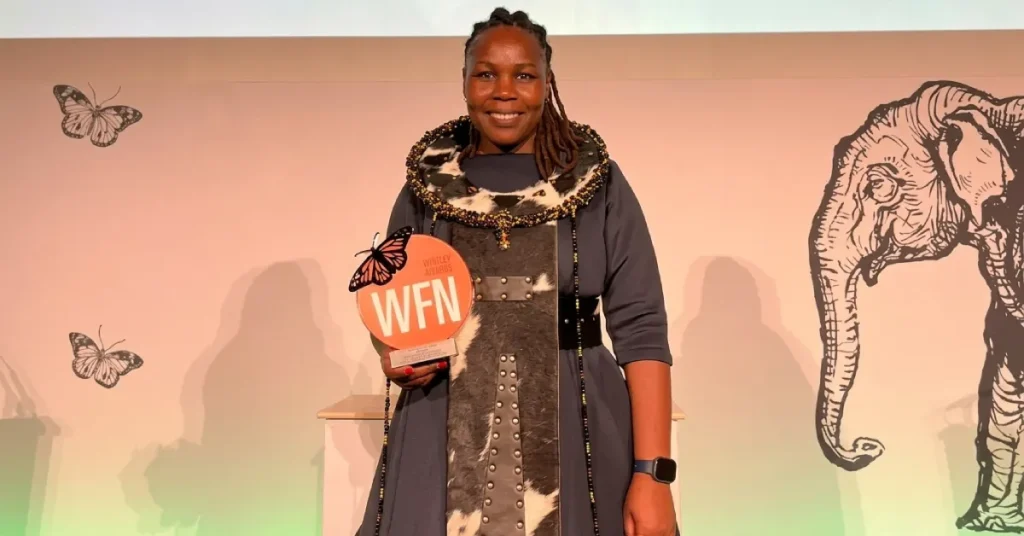
On April 29, 2026, Mbizah received a Whitley Award, with GBP 50,000 in one-year project funding.
According to the Whitley Fund for Nature, the award will support WCA’s work in three additional communal-land wards in Mbire District and the recruitment of six more Community Guardians.
The expansion could help more households report incidents, receive local information, strengthen livestock protection, and respond when wildlife risks rise. This is planned award-supported work, not completed expansion.
Coexistence begins with safety and local leadership
Moreangels Mbizah’s work shows why families should not have to choose between protecting their livelihoods and protecting wildlife.
Human-lion coexistence in Zimbabwe is not about asking people to accept danger for conservation’s sake. It is about helping livestock-owning households, Community Guardians, researchers, and public agencies reduce risk together.
Stronger kraals, mobile bomas, lion lights, local warnings, and wildlife monitoring cannot remove every threat. But they can give people more choices before fear turns into retaliation.
That is the value of community-led environmental conservation: people having the knowledge, tools, and voice to help protect their families and the wildlife around them.
You can also support environmental conservation projects that back practical, locally led solutions for people and nature.
Frequently asked questions
Who is Dr Moreangels Mbizah, and what is Wildlife Conservation Action?
Dr Moreangels Mbizah is a Zimbabwean conservation biologist and the founder and Executive Director of Wildlife Conservation Action. Founded in 2019, WCA works with communities on non-lethal ways to reduce conflict between people, livestock, and wildlife.
How do GPS tracking and local warnings support coexistence?
GPS collars can help identify the movements of collared animals where an alert system operates. Community Guardians add local observations and warnings. The system does not track every lion or cover every household.
What do Community Guardians do?
WCA’s Community Guardians, also called Batabilili, report incidents, share wildlife-risk information, raise awareness, monitor local conditions, and support safer livestock enclosures. They work with households but cannot remove every risk.
Did WCA reduce human-wildlife conflict by 98% in Zimbabwe?
No. WCA reports a 98% decline in its initial Nyaminyami wards 3 and 4. The Whitley Fund for Nature reported reductions of up to 98% in some wards. The figure does not apply across Zimbabwe or all of Mbire District.