Train the children to do tomorrow’s research
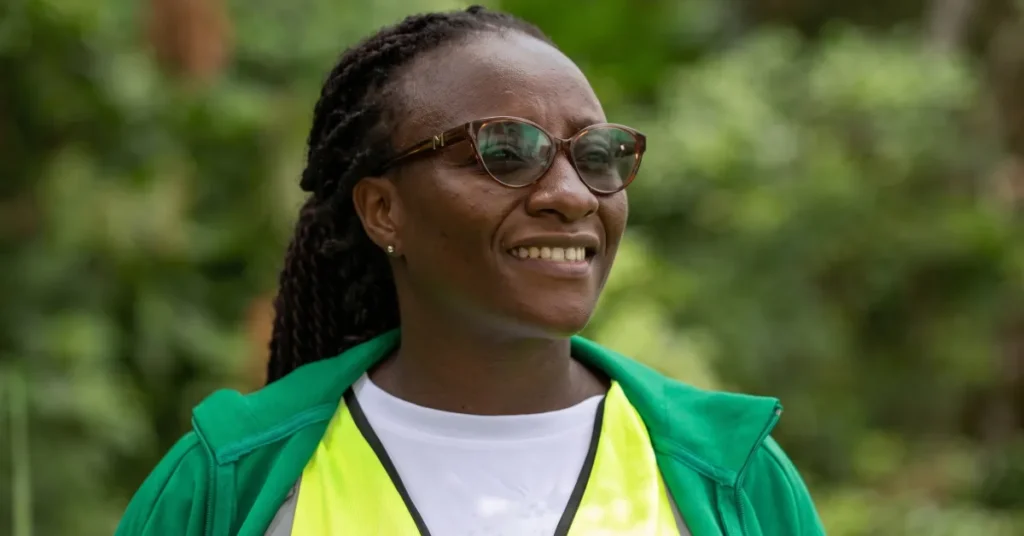
In a 2026 account published by the Whitley Fund for Nature, Dr. Marina Kameni recalls village elders telling visiting researchers that, if they wanted to be welcomed, they should train local children to carry out tomorrow’s research.
Kameni has built that idea into her work.
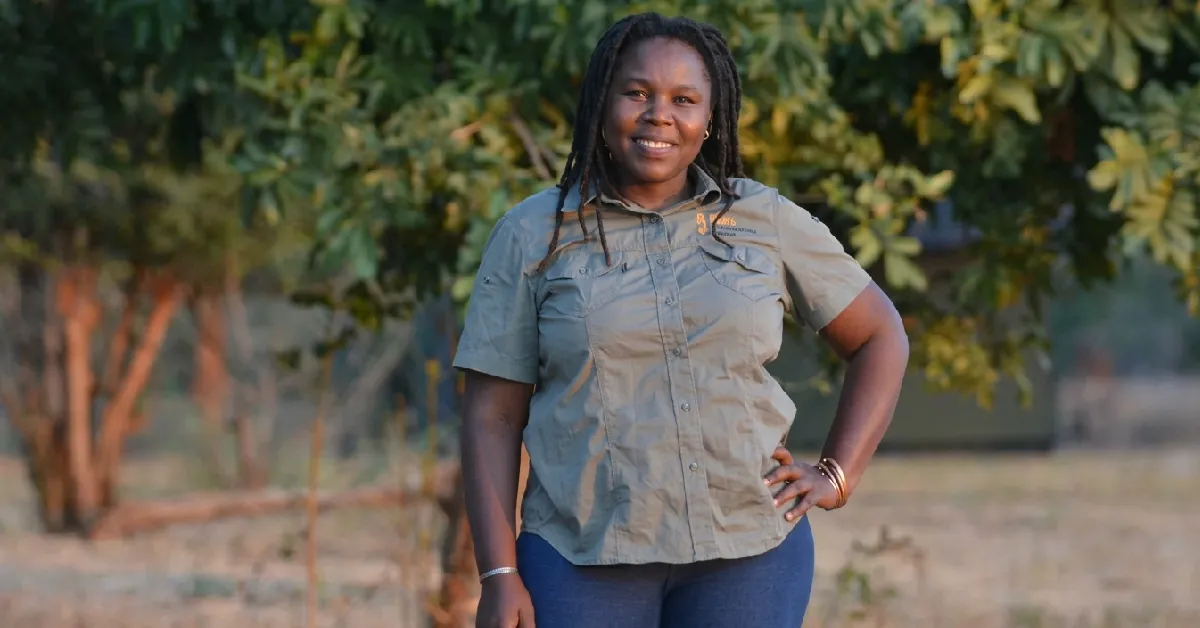
She’s a Cameroonian zoologist, amphibian conservationist, and founder and CEO of Herp-Cameroon. Her work centres on Mount Manengouba in western Cameroon, where forests, springs, farms, grasslands, and crater lakes support a remarkable range of frogs and toads.
Protecting frogs here isn’t as simple as drawing a line around a forest. Families rely on the mountain for land, water, food, and income. Frogs rely on cool forests, clean streams, damp soil, and shaded breeding places.
Through Herp-Cameroon, Kameni connects field research with environmental education, local monitoring, habitat restoration, and lower-impact farming.
Why Mount Manengouba matters for frogs
Mount Manengouba lies along the Cameroon Volcanic Line. Its habitats include montane rainforest, highland grasslands, streams, springs, and crater lakes.
These places are connected. Forests help hold water in the landscape, while shade keeps small streams cooler. Wet soil, leaf litter, rocks, and stream banks give amphibians places to hide, feed, and breed.
The Whitley Fund for Nature describes the mountain as a roughly 500-square-kilometre “sky island” with more than 100 frog and toad species. A 2016 peer-reviewed study found that Mount Manengouba holds nearly half of Cameroon’s frog diversity.
That’s why Mount Manengouba amphibian conservation is about more than protecting individual frogs. It means caring for the forests and water systems that hold the landscape together.
Frogs can respond quickly to environmental change. When streams dry, forest edges become hotter, or chemicals reach breeding sites, local amphibian populations may suffer. Protecting threatened and endangered frogs in Cameroon also means protecting the catchments, forests, and farms around them.
The pressures facing Mount Manengouba’s amphibians
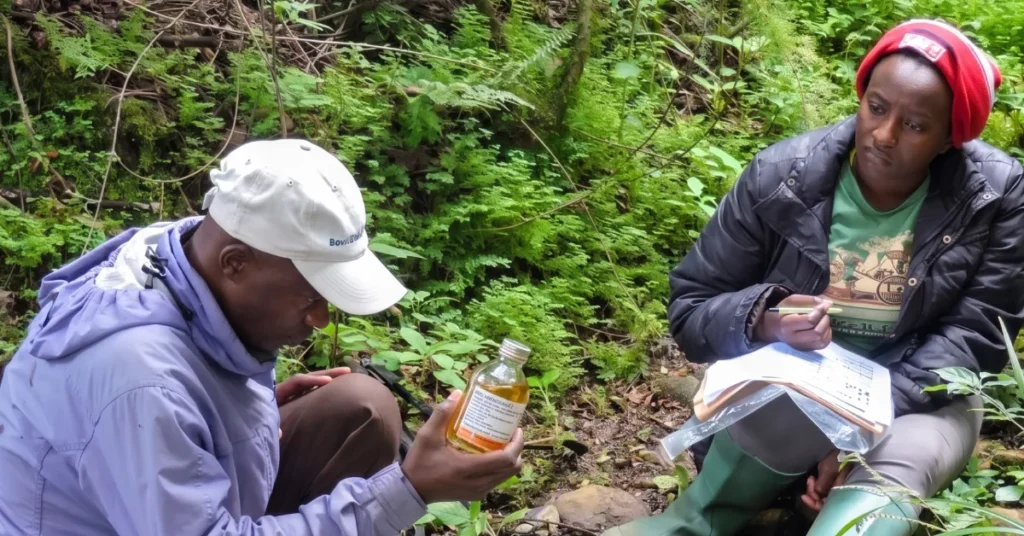
Scientists have documented worrying changes in frog communities on Mount Manengouba. Surveys conducted between 2004 and 2012 found declines in the number and variety of frogs detected. Habitat degradation and the emergence of a fungal pathogen were both part of the picture.
The fungus is called Batrachochytrium dendrobatidis, or Bd. It causes chytridiomycosis, a disease that has harmed amphibians in many parts of the world. Bd has been detected in amphibians sampled on Mount Manengouba, but researchers haven’t shown that it caused every local frog decline. Habitat change, disease, and other pressures can interact in different ways.
The Whitley Fund for Nature lists slash-and-burn farming, forest loss linked to agriculture and logging, livestock grazing, chemical pesticides, invasive species, and disease as pressures in the area.
These aren’t problems separate from people’s lives. Farming families need fertile land and dependable incomes. The challenge is finding ways to meet those needs while reducing damage to forests, streams, and wetlands.
Clearing or burning a hillside can reduce shade and moisture. Grazing can alter plants around springs and stream edges. Chemicals can enter water or soil, while fragmented forests can cut frogs off from suitable shelter and breeding sites.
How Kameni and Herp-Cameroon work with communities
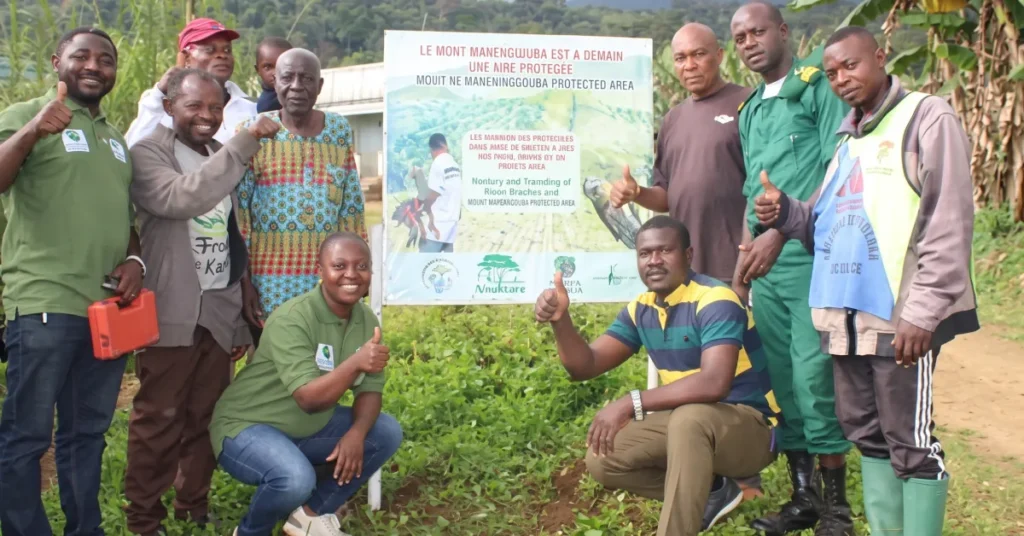
Herp-Cameroon describes its approach as a mix of conservation, education, restoration, awareness, ecological monitoring, and income-generating activities. The aim is to pair science with local participation.
Monitoring can show where frogs live, how habitats are changing, and where protection may be most needed. Environmental education gives children and young people a chance to understand the wildlife around them. Farmers can help shape approaches that respect household needs while placing less pressure on sensitive forests, wetlands, stream banks, and springs.
Women, farmers, elders, children, and young people all bring knowledge to this work. They may notice changing water levels, fewer frog calls, damaged stream banks, or shifts in local land use. They can also help guide restoration and monitoring.
The Whitley Fund for Nature reports that Herp-Cameroon has trained more than 1,500 children in ten schools through its Frogs and Kids programme. It also reports engagement with more than 5,000 residents and sustainable-livelihood training for more than 200 households.
Those figures describe reported programme reach, not independently measured frog recovery. They do, however, show the scale of the relationships behind Kameni’s community-led amphibian conservation work.
What the 2026 Whitley Award will support
In April 2026, Kameni received a Whitley Award for Frogs and Farmers in Mount Manengouba. The award provides £50,000 in funding over one year for the project’s next phase.
The planned work includes:
- Training 500 farmers, including 250 women, in lower-impact farming methods.
- Establishing ten new community monitoring stations.
- Restoring 200 hectares through community planting of native trees.
- Advocating for a 500-hectare expansion of an existing amphibian-focused protected area.
These are project targets, not completed results. The plans are intended to build local knowledge, restore habitat, and strengthen protection for forests and water sources.
The award follows Kameni’s 2020–2022 EDGE Fellowship for a project focused on threatened frogs on Mount Manengouba and local awareness work.
What this means for frog conservation in Cameroon
Frogs can help reveal environmental change because many species depend on clean water, humid conditions, and intact habitat. They aren’t perfect indicators, but declines can warn that a wider ecosystem is under pressure.
For Mount Manengouba’s frogs, awareness alone isn’t enough. They need healthy streams, connected forests, ongoing monitoring, and farming options that make sense for local families.
Rainforest Trust reports that it and the Cameroon Wildlife Conservation Society helped establish the Mount Manengouba Herpeto-ornithological Sanctuary in 2023. That sanctuary is separate from the proposed 500-hectare expansion supported by Kameni’s Whitley-funded project. Kameni and Herp-Cameroon shouldn’t be credited with establishing the existing sanctuary.
Kameni’s work shows what conservation can look like when research and local experience meet. Scientists can track changes in frog populations and habitat, while communities share what they see, care for local water sources, and pass knowledge to younger generations.
Support conservation rooted in community
The future of Mount Manengouba’s frogs is tied to its forests, water, farms, and communities.
The Nature Guardians shares stories like this because community-led environmental conservation deserves wider support. You can also volunteer for environmental conservation or support environmental conservation projects that connect local action, environmental learning, and care for shared landscapes.
FAQs about Dr. Marina Kameni and Mount Manengouba frogs
Who is Dr. Marina Kameni?
Dr. Marina Kameni is a Cameroonian zoologist and amphibian conservationist. She founded and leads Herp-Cameroon, which works on amphibian and reptile conservation through research, education, restoration, monitoring, and livelihood-related activities.
Why are frogs on Mount Manengouba under pressure?
Research has documented declines in frog communities on the mountain. Habitat degradation and Bd, the fungus linked to chytridiomycosis, are concerns. Forest loss, farming expansion, grazing, fires, and chemical pesticides can also damage the cool, wet habitats frogs need.
Have the 2026 Whitley Award targets been completed?
No. Training 500 farmers, establishing ten monitoring stations, restoring 200 hectares, and advocating for a 500-hectare expansion are planned targets. Earlier participation figures are reported programme-reach totals, not proof of completed frog-population recovery.