On 7 May 2013, Karnataka notified the 906.187-square-kilometre Malai Mahadeshwara Wildlife Sanctuary in Chamarajanagar district. The sanctuary protects dry forest and scrub in a wider landscape used by tigers, elephants, leopards and other wildlife.
Its boundaries don’t define the limits of wildlife movement. Leopards may travel through forest, rocky slopes, farms and village edges. Elephants may move between forest ranges. When roads, land conversion or forest degradation interrupt those routes, movement becomes harder and risks can rise for nearby communities.
This is the central question behind much of Sanjay Gubbi’s work: how can Karnataka protect wildlife while making shared landscapes safer and fairer for the people who live there?
A forest link with room for leopards to move
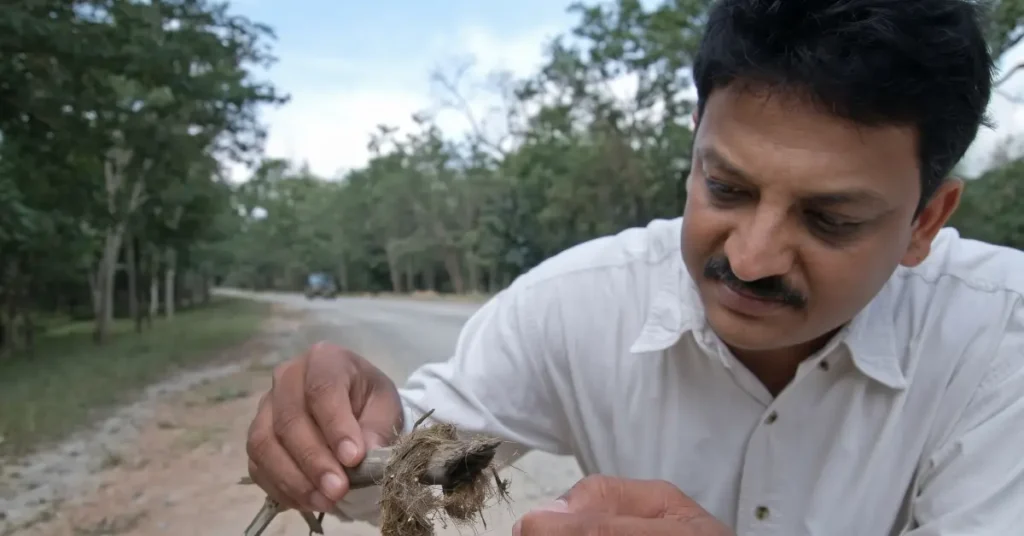
The Cauvery–Malai Mahadeshwar Hills landscape connects towards Biligirirangaswamy Temple Tiger Reserve and Sathyamangalam Tiger Reserve. It forms part of a wider habitat used by animals that need space, including tigers, elephants and leopards.
A wildlife corridor isn’t always a narrow strip of forest between two parks. It can be a broader working landscape made up of forest, scrub, riverbanks, rocky outcrops and other usable habitat. These areas can help wildlife move between larger habitat blocks.
For leopards, connected habitat may provide more room to find food, breed and avoid disturbance. But a corridor can’t survive as a line on a map. It needs habitat protection, careful road and land-use planning, monitoring and local support.
Field studies in the Cauvery and MM Hills landscape later established benchmarks for tiger distribution, prey and habitat condi
tions. These benchmarks provide a starting point for tracking how the landscape changes over time.
Who is Sanjay Gubbi?
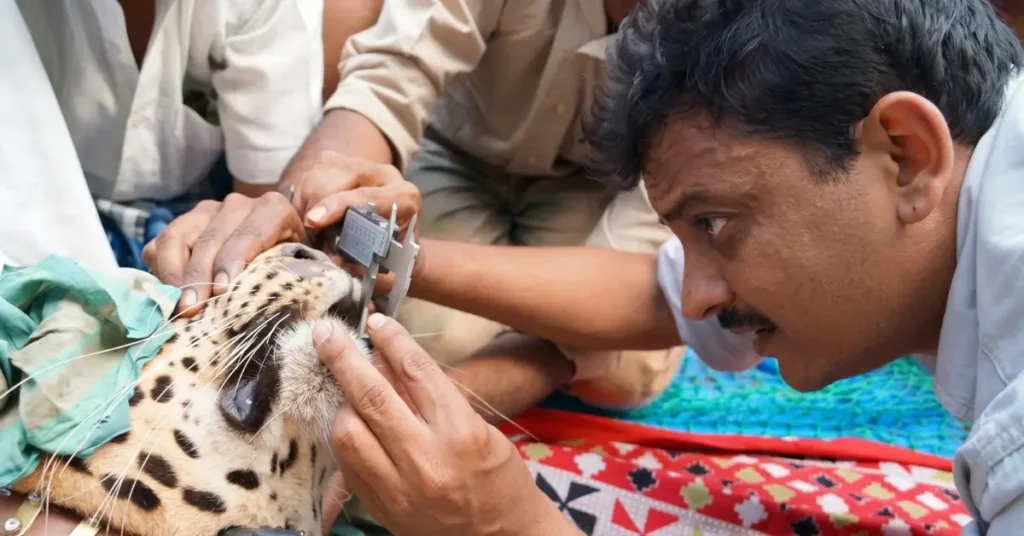
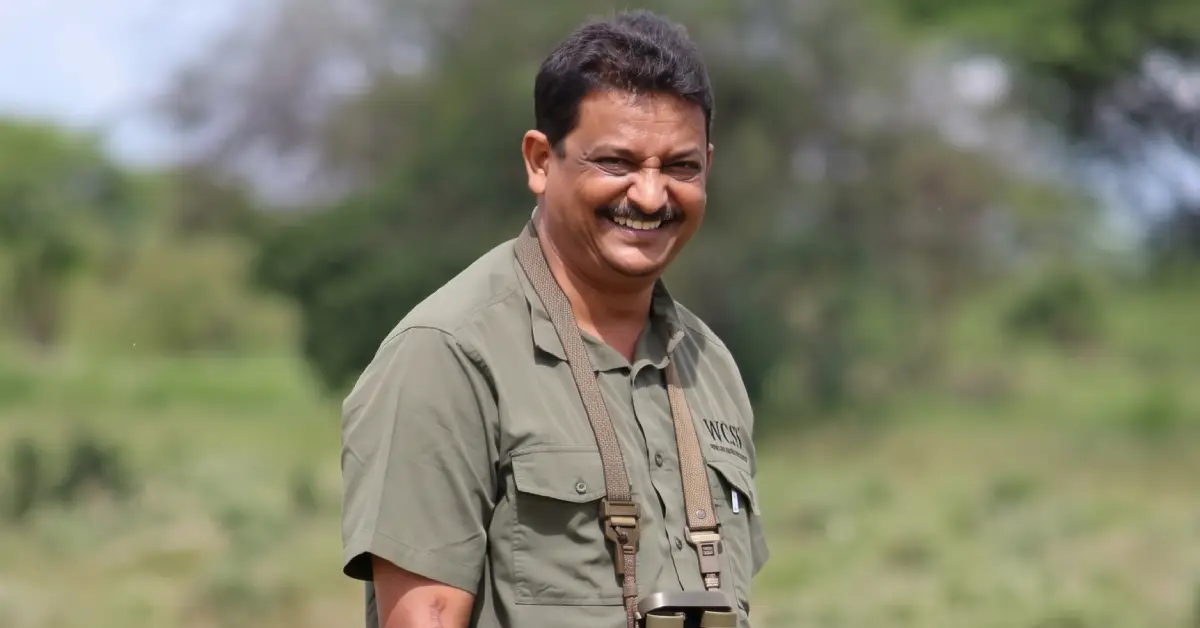
Sanjay Gubbi is a Karnataka wildlife biologist whose work focuses on large carnivores, especially tigers and leopards. It also covers forest fragmentation, wildlife corridors, conservation policy and human–wildlife conflict.
Much of the earlier research and conservation planning discussed here was carried out with the Nature Conservation Foundation. He is currently listed as Programme Head at Holématthi Nature Foundation. His work links field research with public communication, community engagement and policy discussions.
That work involves more than scientists. Forest departments, local communities, elected representatives, schools, journalists, policymakers and conservation groups all have roles in deciding how shared landscapes are managed.
What leopard research reveals beyond protected areas
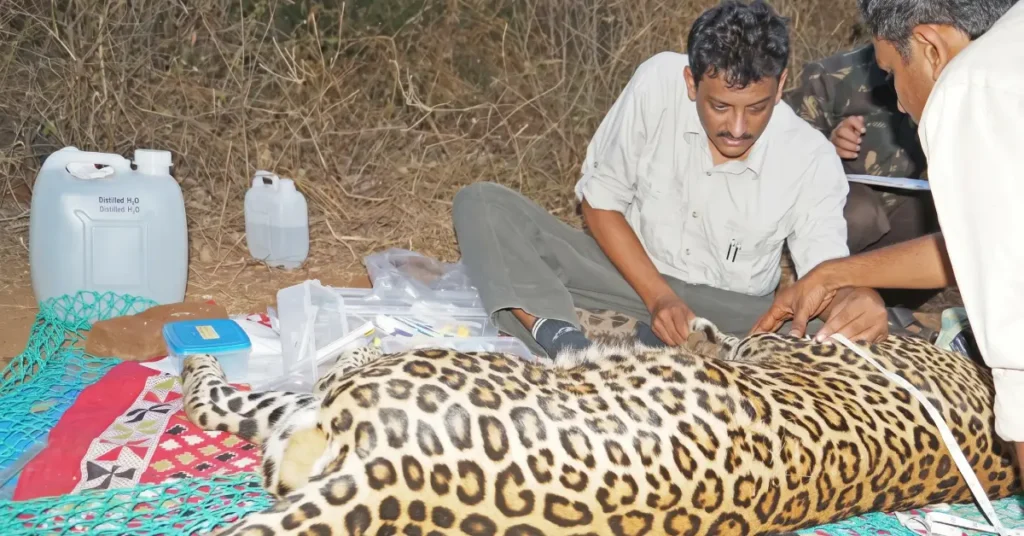
Leopard conservation in Karnataka can’t stop at the gates of national parks and wildlife sanctuaries. Research co-authored by Gubbi shows that leopards use a wider range of places, including forests, rocky habitat and settled landscapes.
A 2020 leopard occupancy study covered about 24,000 square kilometres of southern India. Its study area included protected forests, multiple-use forests, rocky habitat and heavily settled land.
An occupancy survey estimates where a species uses a landscape by examining evidence of presence across surveyed areas. It doesn’t count every animal. Camera traps provide another type of evidence. Their images can help researchers identify individual leopards through their unique rosette patterns and study where they appear.
A 2015 study estimated that leopards occupied around 84,000 square kilometres outside Karnataka’s designated national parks and wildlife sanctuaries—about 47% of Karnataka’s geographic area. This was a model-based estimate using local-media reports and occupancy analysis, not a direct count of every leopard.
The finding still has an important conservation implication: leopards are part of many shared landscapes. That doesn’t mean every village edge, plantation or rocky hill is safe habitat. Nor should communities have to accept unmanaged danger or livestock losses. It means leopard research in Karnataka must look beyond protected-area boundaries.
Questions about prey, road crossings, land-use change, rapid reporting and compensation all belong in the same conservation picture.
Connecting forests across Karnataka
Gubbi’s work on wildlife corridors in Karnataka is part of a wider, collaborative effort to connect protected habitats.
A 2016 peer-reviewed paper by Gubbi and colleagues reported that this conservation-planning approach added 2,385 square kilometres to Karnataka’s protected-area network. It connected 23 protected areas and raised protected-area coverage from 3.8% to 5.2% of the state’s land area.
This wasn’t the work of one person alone. It involved conservationists, government officials and other partners working across a complex ecological and political landscape.
Connected habitat can help tigers, elephants and leopards move between forest areas that might otherwise become isolated. Legal protection, however, is only one step. Wildlife also needs forest cover, prey, effective management and safer ways to cross or avoid dangerous infrastructure.
The Cauvery–MM Hills wildlife corridor isn’t a finished conservation story. Roads, mining, deforestation and poorly planned development can damage or divide habitat when they aren’t carefully managed.
Coexistence means protecting people as well as wildlife
Human-leopard conflict in Karnataka often makes headlines after a frightening sighting or attack. Preventing conflict, though, starts much earlier.
It involves land-use decisions, livestock protection, quick responses from officials, clear information and support for families who lose animals or crops. It also means taking people’s safety seriously.
Gubbi’s conservation work has included outreach with local communities, students, leaders, policymakers and the media. The aim isn’t to ask communities to put wildlife above their own needs. It’s to build practical ways for people and wildlife to share landscapes with fewer risks.
In 2017, Gubbi received the Whitley Award for Reducing deforestation in Karnataka’s tiger corridors, India. The award wasn’t specifically for leopard conservation. The project included firewood alternatives, youth support, outreach and help for people affected by livestock and crop losses to access government support.
In a 2024 update, the Whitley Fund reported that Gubbi and the Holématthi Nature Foundation team had distributed LPG cookstoves to nearly 2,500 households since 2017. The fund also reported lower firewood use. These are project-reported results, but they illustrate an approach that connects forest protection with daily household needs.
No single measure will end human–leopard conflict. Habitat planning, reliable local response, fair compensation and long-term communication all remain necessary.
What Gubbi’s work shows about leopard conservation in Karnataka
Sanjay Gubbi’s work shows that conservation is about more than protecting animals inside parks. It means understanding where leopards live, keeping habitats connected, reducing pressure on forests and responding fairly when people face losses or safety concerns.
Connected forests can give leopards, elephants and tigers more room to move. Those habitat links work best alongside safer infrastructure, healthy forests, responsive public systems and decisions shaped by local experience.
Supporting community-led environmental conservation means backing conservation that listens to communities while protecting the habitats wildlife needs. Readers can also volunteer for environmental conservation or support environmental conservation projects with The Nature Guardians.
FAQs about Sanjay Gubbi and leopard conservation in Karnataka
What is Sanjay Gubbi’s current conservation role?
His earlier and published research and conservation-planning work discussed here was carried out with the Nature Conservation Foundation. He is currently listed as Programme Head at Holématthi Nature Foundation, where his work includes large-carnivore conservation, policy, communities and conflict mitigation.
How is an occupancy survey different from a leopard population count?
An occupancy survey estimates where leopards use a landscape by analysing signs of presence across surveyed areas. It doesn’t count every animal. Camera traps can add information about individuals and distribution, but an occupancy estimate shouldn’t be presented as a current statewide population total.
Why can’t protected-area expansion alone solve leopard conservation?
Leopards also use rocky areas, multiple-use forests and settled landscapes. Conservation therefore needs habitat links, careful infrastructure planning, responsive conflict measures and support for communities living near wildlife.
What was Sanjay Gubbi’s 2017 Whitley Award for?
The award recognised his project to reduce deforestation in Karnataka’s tiger corridors. It included outreach, firewood alternatives, youth support and help for people affected by livestock and crop losses. It wasn’t an award specifically for leopard conservation.