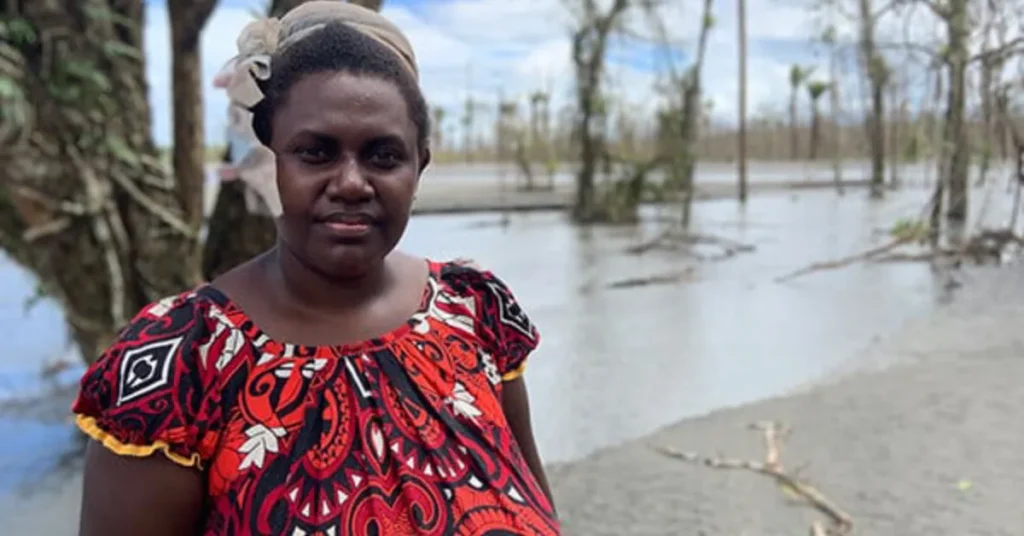
Where Panguna’s legacy is felt every day
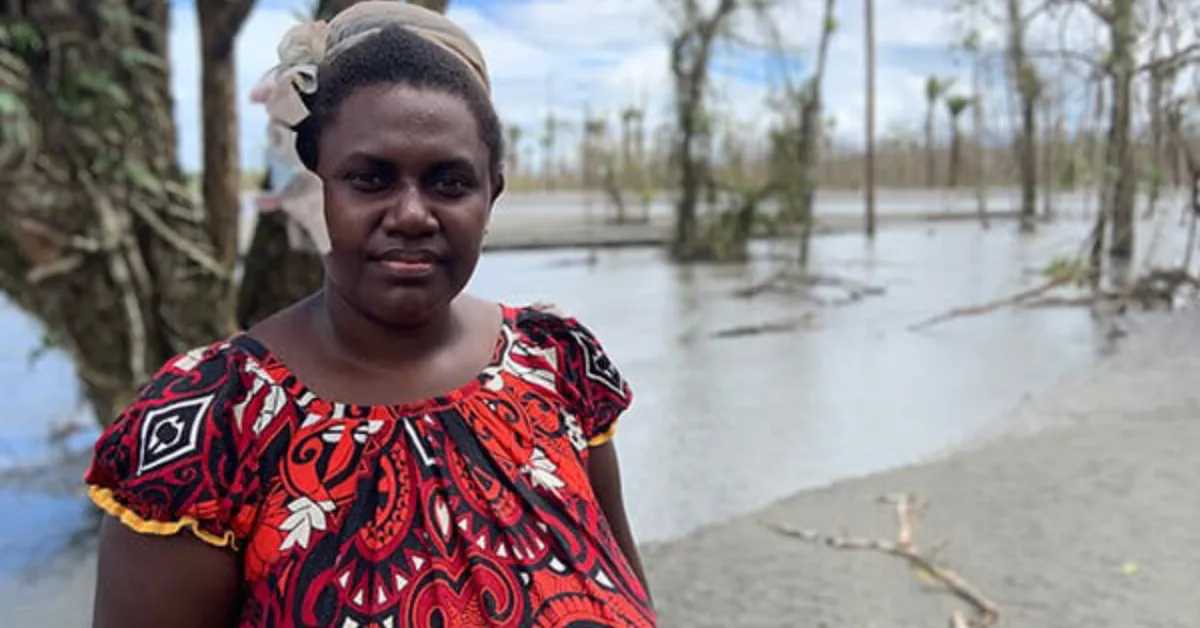
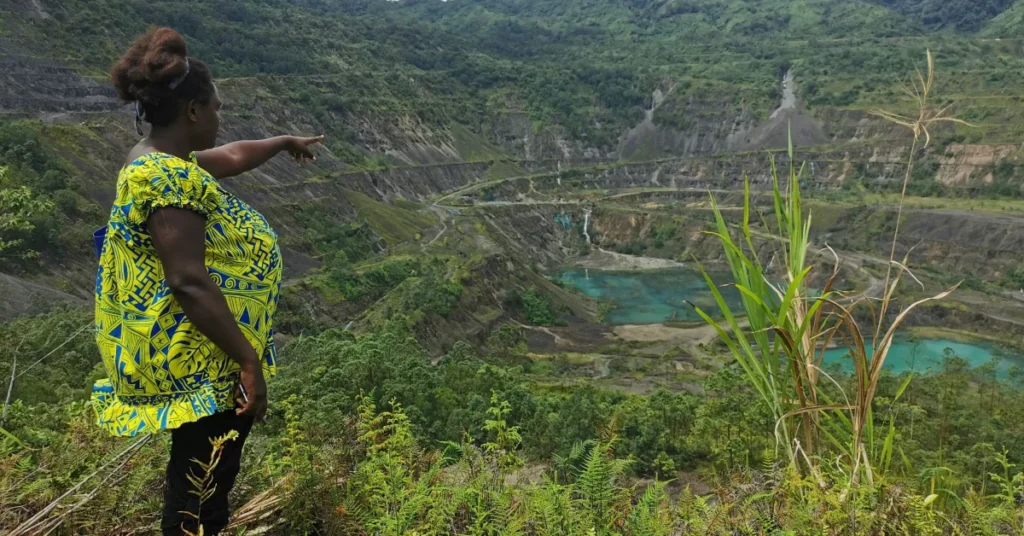
Below the former Panguna mine in Central Bougainville, crossing a river can decide what is possible that day.
People travel through this landscape to reach gardens, schools, clinics, markets and family land. But decades after mining stopped, parts of the Kawerong-Jaba river system remain difficult and dangerous to cross.
The independent Panguna Mine Legacy Impact Assessment found that mine waste, including tailings, and altered river channels have contributed to flooding, moving sediment, unstable riverbeds and quicksand hazards at some crossings. The effects are not confined to the mine pit or old industrial buildings. They reach downstream through the floodplain toward Empress Augusta Bay.
This is home for Theonila Roka Matbob, a Nasioi traditional landowner from Makosi, downstream of Panguna. Alongside other mine-affected residents, she helped bring these everyday risks into a formal process for Panguna mine accountability.
The result is not a court ruling or a completed cleanup. But it has brought an independent investigation, a formal discussion about remedies and early work on a small number of urgent hazards.
Who is Theonila Roka Matbob?
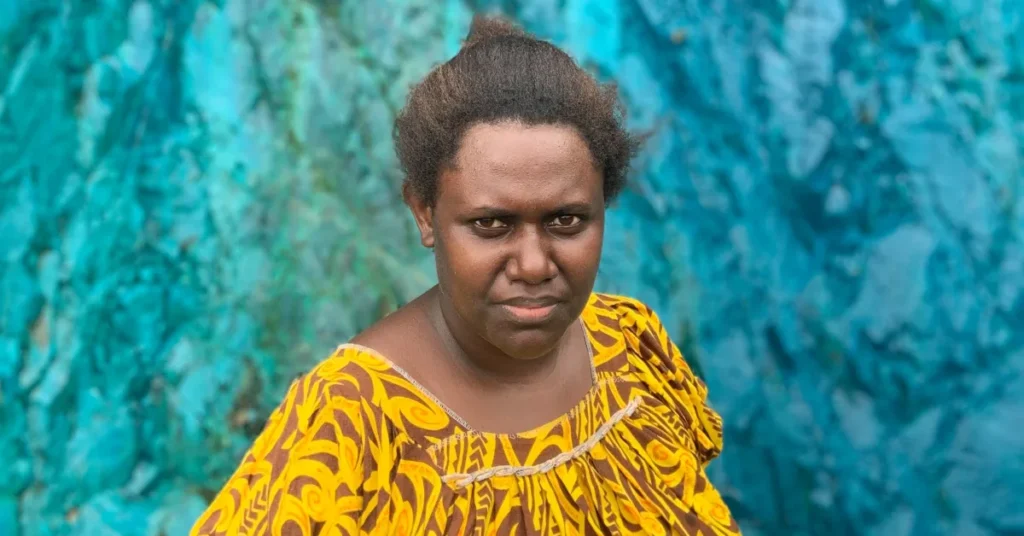
Theonila Roka Matbob is an Indigenous Nasioi landowner, community advocate and the primary complainant named in the Panguna legacy process.
She was elected Member for Ioro in the 2020 Bougainville General Election. The Autonomous Bougainville Government lists her as Minister for Community Government.
Her elected role gave her a public platform. Still, her work on Panguna began with the experiences of people living with the mine’s legacy.
For communities downstream, environmental justice in Bougainville is not just about testing water or fixing damaged structures. It is about being able to move safely through the landscape, protect family land and have a real voice in decisions about repair.
From community testimony to an OECD complaint against Rio Tinto
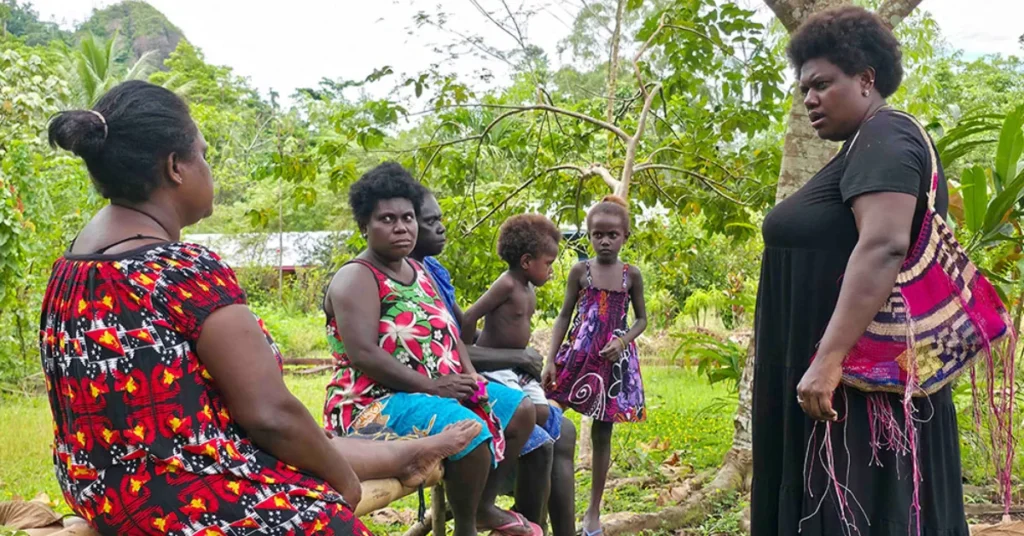
The Panguna copper and gold mine operated from 1972 to 1989 through Bougainville Copper Limited, then a Rio Tinto subsidiary. Mining ended in 1989, and Rio Tinto later sold its interest in BCL in 2016.
Panguna’s history is closely tied to Bougainville’s wider political and conflict history. But residents downstream were also facing a more immediate question: who would respond to the damage and risks that remained?
In September 2020, 156 people from mine-affected communities filed an OECD complaint against Rio Tinto through Australia’s National Contact Point for Responsible Business Conduct. The Human Rights Law Centre represented the group, and Matbob was the lead complainant.
They called for Rio Tinto to engage with affected communities, support an independent environmental and human-rights assessment, and help create a way to address harm and rehabilitation.
This was not a lawsuit.
The Australian National Contact Point for Responsible Business Conduct, or AusNCP, handles complaints under the OECD Guidelines for Multinational Enterprises. It does not act like a court. Instead, it helps parties hold discussions and try to resolve disputes through conciliation.
That means the process did not decide whether Rio Tinto broke the OECD Guidelines or had legal liability for Panguna’s damage. It did, however, give residents a formal path to press their concerns and ask for an independent investigation.
In July 2021, Rio Tinto and Bougainville community representatives announced an agreement to assess Panguna’s legacy impacts. Rio Tinto agreed to provide most of the funding, while BCL also contributed through an independent funding company.
For the communities involved, that changed the conversation. Their concerns would now be examined through a structured assessment rather than left as stories that powerful institutions could dismiss.
The Panguna Mine Legacy Impact Assessment put risks on the record
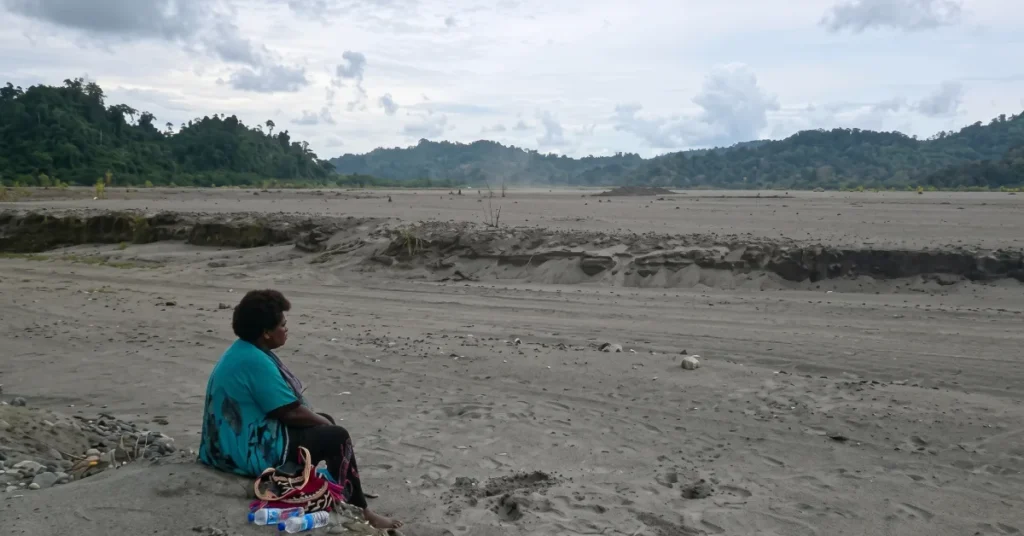
The Panguna Mine Legacy Impact Assessment brought many groups into the same process. Its Oversight Committee included community and landowner representatives, the Autonomous Bougainville Government, the Papua New Guinea government, BCL, Rio Tinto and the Human Rights Law Centre.
An independent facilitator chaired the committee, while Tetra Tech Coffey carried out the first phase of the assessment.
After two years of fieldwork, technical analysis and community engagement, Phase 1 was published on December 6, 2024.
The report identified actual and potential impacts linked to the former mine, including:
- unstable buildings and landforms;
- mine-related flooding and sediment movement;
- unsafe former mine infrastructure;
- contamination around some old processing and chemical-storage areas; and
- hazards linked to waste rock and tailings.
The findings also brought more detail to claims that had often been discussed in broad terms.
Phase 1 found mine-related chemical or metal risks in drinking-water samples from the mine pit and the Kawerong-Jaba River. Other community drinking-water samples tested during that phase did not show the same mine-related risk.
That does not mean the watershed no longer faces serious problems. It shows why testing needs to be specific. People need clear information about where risks are found, how they affect daily life and which hazards need action first.
For Matbob and the other complainants, the assessment was not the remedy. It was the evidence needed to move the discussion forward.
What has changed — and what remains unresolved
In November 2024, Rio Tinto, BCL and the Autonomous Bougainville Government signed a memorandum of understanding, or MoU. It created a Roundtable to consider the assessment’s findings, consult affected communities and develop a possible remedy mechanism.
The first Roundtable meeting took place on March 6, 2025.
This matters because it moved the process beyond investigation. But it did not settle compensation, create a cleanup fund or promise a full restoration plan.
Instead, it created a space for communities, companies and government representatives to discuss what remedy could look like and how it should be shaped.
Some urgent-risk work has also begun.
In March 2026, BCL reported that it had removed three unsafe masonry walls identified in the assessment as imminent severe risks. Later that month, Rio Tinto reported that hazardous-material removal had started at Loloho Port.
Rio Tinto also said Roundtable participants were continuing work on other priorities, including high-risk structures, flooding at Kuneka Creek and monitoring unstable ground.
These are limited but tangible steps. They do not amount to full mine remediation in Bougainville.
Long-term work may still involve stabilising damaged land, managing sediment and flood risks, dealing with contamination hotspots and building a remedy process that affected communities trust. Those decisions are still being developed.
Why Matbob’s work matters for environmental justice

In 2026, Theonila Roka Matbob received the Goldman Environmental Prize for her environmental justice work linked to Panguna and Rio Tinto accountability.
The award recognises her leadership, but this has always been a collective effort. Mine-affected residents, landowners, community advocates, legal representatives and government bodies all played a part in bringing Panguna’s legacy into a formal process.
Matbob’s story also shows why environmental harm cannot be separated from daily life. A changed river can make travel unsafe. Flooding can affect gardens and access to services. Old mine structures can create dangers long after a mine closes.
The AusNCP has not ruled on the merits of the complaint or decided whether Rio Tinto complied with the OECD Guidelines. That legal distinction still matters.
Yet the process has changed what is on the public record. It has produced an independent assessment, brought company and government representatives into discussions with affected communities and led to early action on several urgent hazards.
That is what Matbob and the Panguna communities have achieved so far: they made it much harder for the mine’s legacy to be ignored.
Their work reflects the value of community-led environmental conservation. People who live closest to damaged landscapes often understand the risks first. They should also help shape what happens next.